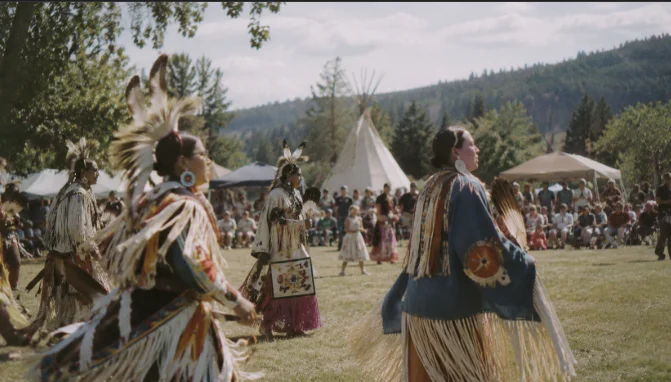
Can Anyone Attend a Powwow? How to Know When Visitors Are Welcome
You’ve come across a poster advertising a powwow near your community, but you’re not sure whether you’re invited. Perhaps you’ve never attended an Indigenous cultural gathering before and are concerned about entering a space where you might not belong.
Many powwows across Canada actively welcome non-Indigenous visitors. Knowing how to recognize a public invitation, understand the boundaries of participation and approach the gathering as a respectful guest can make your first visit much more comfortable.
Can Non-Indigenous People Attend a Powwow?
Yes. Non-Indigenous people are welcome to attend powwows that are open to the public. You do not need Indigenous ancestry, a personal connection to the host community or previous knowledge of powwow traditions to attend an event that welcomes everyone.
Many First Nations communities, Indigenous organizations and universities organize powwows that encourage people from different backgrounds to come together, listen, learn and build relationships.
For someone unfamiliar with Indigenous cultural events, a public powwow offers an opportunity to experience living cultural traditions while learning directly from the people who maintain them.
What a Public Invitation Actually Means
When organizers advertise a powwow as open to the public, they are inviting people outside their immediate community to attend.
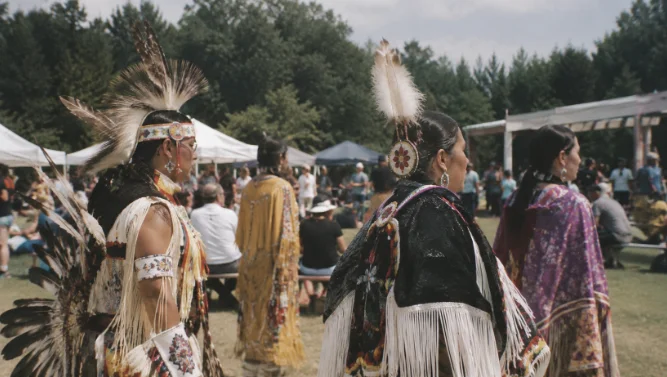
Depending on the event, visitors may watch dancing, listen to drumming and singing, purchase food and artwork, and participate in activities specifically opened to everyone.
A public invitation does not mean that every activity is available for unrestricted participation. Certain spaces, songs, dances and gatherings may have their own protocols, even within an otherwise public event.
Think of the invitation as permission to be present, with the understanding that your hosts will guide you through what happens next.
Why Not Every Gathering Is Open to Visitors
Indigenous communities also hold private gatherings, ceremonies, family events and celebrations intended for particular participants. These occasions may have cultural, spiritual or personal significance that is not appropriate for outside observation.
An event does not automatically become public because someone has shared its date or location online. Information may have been posted primarily for community members, relatives or invited participants.
If a gathering is not open to visitors, respect that decision without asking the organizers to make an exception. Look instead for public cultural events where guests are explicitly welcome.
How to Tell Whether a Powwow Is Open to the Public
The most reliable way to determine whether you can attend is to check information published directly by the host organization.
Event directories and tourism websites are useful for discovering powwows, but the organizers themselves determine who is invited and what visitors need to know.
Look for Clear Invitations on Event Posters
Powwow posters often contain considerably more information than just the date and location. Look for wording that identifies the intended audience, along with admission details, registration requirements and visitor information.
| Event poster wording | What you should do |
|---|---|
| Everyone welcome | Confirm the practical attendance details. |
| Open to the public | Check admission requirements and visitor protocols. |
| All nations welcome | Check whether the invitation explicitly includes the general public. |
| Community members only | Do not attend unless the hosts personally invite you. |
| Registration required | Confirm eligibility and complete any necessary registration. |
| Invitation only | Attend only if you have received an invitation. |
| No visitor information | Contact the organizers before making travel arrangements. |
Pay attention to which part of the event the wording applies to. Registration information, for example, may be intended for dancers, drum groups or vendors rather than general visitors.
Similarly, a poster advertising dance competitions and prize money does not necessarily explain spectator admission. Look for a separate visitor information section or an official event page.
Check Who Is Hosting the Event
Reliable information usually comes from one of the following:
- The host First Nation or its powwow committee.
- An Indigenous Friendship Centre.
- A university’s Indigenous student centre or Office of Indigenous Relations.
- An Indigenous-led cultural organization.
- An official event website maintained by the organizers.
Across Canada, Friendship Centres provide Indigenous-led community services and programming. Their local websites and social media pages can be useful starting points for discovering public cultural gatherings.
Organizations such as Indigenous Tourism BC and Indigenous Tourism Québec also provide information about Indigenous cultural experiences and events. These resources are particularly useful when travelling outside your own region.
Always check the year on an event poster. Annual powwows may appear in search results long after the advertised gathering has taken place, and dates, locations and admission arrangements can change from one year to the next.
What to Do When the Invitation Is Unclear
You do not need to write a lengthy explanation of why you want to attend. A short, polite message is usually sufficient.
For example:
Hello, I’m interested in attending your upcoming powwow as a first-time visitor. Could you please let me know whether the event is open to the public and if there are any visitor protocols I should be aware of? Thank you.
If you are travelling with children or have accessibility requirements, you can include a relevant question in the same message.
Powwow committees often have numerous responsibilities leading up to an event. If you do not receive a response and cannot find a clear public invitation, choose another gathering where visitor information is readily available.
Does the Type of Powwow Affect Whether You Can Attend?
Powwows differ in their organization, purpose, size and program. Understanding a few common distinctions can help you know what to expect, although the type of powwow alone does not determine whether visitors are welcome.
Traditional Powwows
Traditional powwows generally emphasize gathering, community relationships, dancing and singing rather than formal dance competitions.
Some are very welcoming to outside visitors. Others may be smaller gatherings with a more community-focused program.
First Nations communities across Ontario, for example, organize traditional powwows that explicitly welcome the public. The word traditional does not, by itself, indicate that a gathering is private or restricted to Indigenous participants.
The host’s invitation remains the most reliable guide.
Contest Powwows
Contest powwows feature competitive dancing, often organized into categories according to dance style and age.
Larger events may attract dancers and drum groups from numerous communities, with vendors, food stalls and activities taking place throughout the day. Some gatherings span an entire weekend and feature multiple dance sessions.
When these events are open to the public, visitors can watch the competitions from designated spectator areas. Registration and eligibility requirements for competitors are separate from the conditions of public attendance.
You do not need to register as a dancer simply to watch.
University and Urban Community Powwows
University powwows and gatherings organized by urban Indigenous organizations can be particularly approachable for first-time visitors because organizers often provide detailed schedules, etiquette guidance and answers to practical questions.
The First Nations University of Canada Spring Celebration Powwow in Regina, the University of Toronto Mississauga’s All-Nations Powwow and the University of Waterloo’s annual powwow are examples of gatherings that have welcomed members of the wider public.
Public celebrations around National Indigenous Peoples Day, held annually on June 21, offer further opportunities to attend Indigenous-led events.
Remember, however, that not every Indigenous cultural celebration is a powwow. Different nations and communities have distinct cultural traditions, and the protocols you encounter at one gathering may not apply to another.
Being Welcome Does Not Mean Participating in Everything
One of the most useful things to understand before attending is the difference between being invited to observe and being invited to participate.
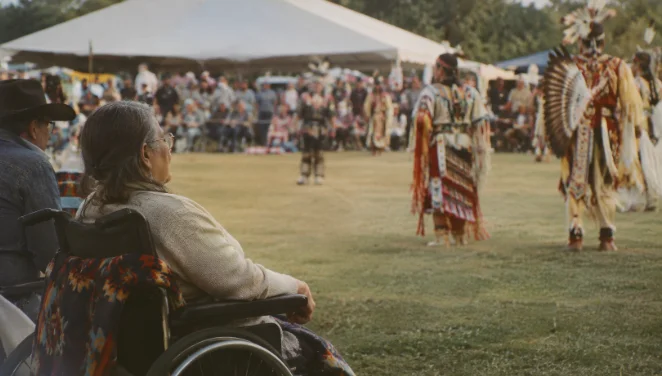
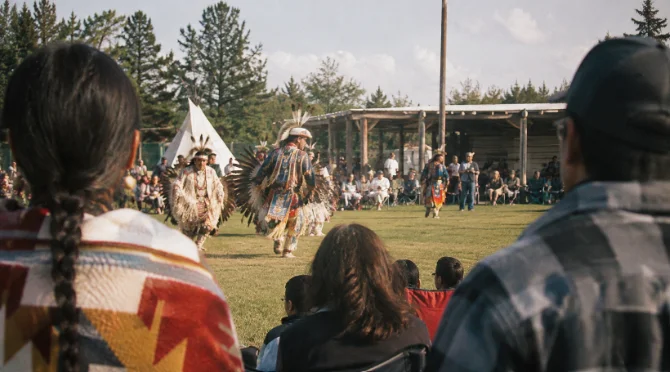
Watching from a designated seating area, listening to the announcer and exploring public vendor spaces are generally appropriate activities for visitors at an open powwow.
Entering the dance arena, photographing individuals or joining particular activities may require a separate invitation or permission.
When Visitors May Join a Dance
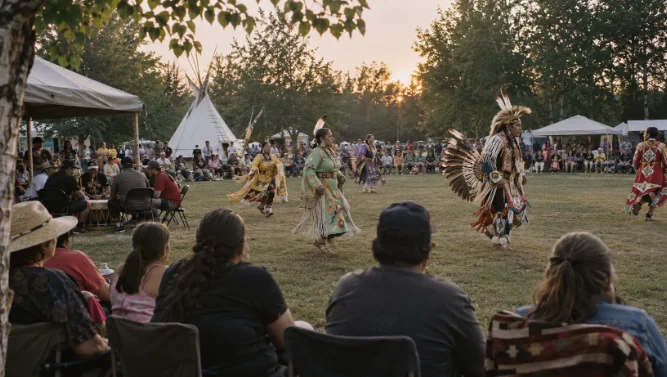
Non-Indigenous visitors can often participate in intertribal dances when the announcer invites everyone into the arena.
You generally do not need special clothing, regalia or previous dancing experience for an intertribal dance that is open to all attendees. Comfortable everyday clothing is appropriate unless the hosts specify otherwise.
If you feel uncertain, watch how others enter and move around the arena. Follow the direction and pace indicated by the organizers, give dancers sufficient space and avoid treating participation as a photo opportunity.
There is also nothing wrong with remaining seated and enjoying the dancing. Participation is an invitation, not an obligation.
Respecting Spaces and Activities Reserved for Participants
Some seating areas may be reserved for dancers, Elders, singers or other participants. Changing areas and spaces used for preparing regalia should not be treated as public viewing areas.
Photography permissions can also change throughout the day. A host may welcome general photographs during some dance categories but ask everyone to put their cameras away during particular songs or ceremonies.
Listen to the Master of Ceremonies, ask before taking close-up photographs and avoid touching a dancer’s regalia.
If something falls from a dancer’s regalia, particularly a feather, leave it where it is and notify an arena director or event official rather than picking it up yourself.
When you’re unsure whether an activity is intended for visitors, observing from outside the arena is a sensible choice until further guidance is given.
Attending Alone, With Friends or With Children
You do not need to know someone at a public powwow to attend. Your approach to the visit may simply differ depending on who is coming with you.
Attending alone: Arriving before Grand Entry gives you time to find your bearings, locate visitor seating and become familiar with the announcer’s instructions. You can explore vendor areas and enjoy the gathering at your own pace without feeling obliged to participate in every activity.
Attending with friends: Agree beforehand to follow the hosts’ guidance, particularly regarding photography and access to the arena. Avoid conversations that interrupt songs or announcements, and remember that not every moment needs to be captured on a phone.
Attending with children: Explain that regalia is meaningful clothing rather than a costume and that the dance arena is not a playground. Bring water, plan for breaks and consider hearing protection for children who are sensitive to loud sounds.
For families, attending a portion of the program may be more manageable than staying for an entire day. A shorter, attentive visit can be just as worthwhile.
If you’re visiting as a tourist, approach the gathering as a guest rather than an attraction on your travel itinerary. The powwow is taking place for its community and participants, not solely for the benefit of visitors.
Once You Know You Are Welcome, Plan Your Visit
Once you’ve confirmed that the event welcomes the public, planning your first powwow visit becomes much easier, particularly if you understand the venue, schedule and travel arrangements.
Before leaving home, check the following:
- Admission: Is the event free, ticketed or subject to advance registration?
- Schedule: When does Grand Entry begin, and when can visitors arrive?
- Transportation: Is parking available, or can you reach the venue by public transit?
- Accessibility: Are suitable seating, accessible washrooms and walking surfaces available?
- Weather: Is the gathering indoors or outdoors, and is shelter available?
- Supplies: Should you bring a folding chair, drinking water, sun protection and cash?
- Visitor protocols: Has the host published specific guidance on photography, clothing or participation?
Some rural venues may have limited mobile reception, so saving the event poster, address and directions before travelling is worthwhile. Bringing some cash can also be useful when purchasing food, artwork or handmade goods from vendors who may not accept electronic payments.
There is no need to arrive with extensive knowledge of dance styles, songs or cultural traditions. Bring an interest in learning rather than a list of expectations. Take time to explore the work of Indigenous artists, listen to the announcer and appreciate the gathering on its own terms.
Being a respectful guest is not about knowing every answer before you arrive. It is about accepting the invitation with humility, paying attention and recognizing that the people hosting the powwow are the ones who determine how their gathering should be experienced.