Powwow Accessibility: Planning a Comfortable Visit for Different Needs
A powwow can be a wonderful opportunity to experience Indigenous dancing, singing, art and community life. But if you use a wheelchair, experience chronic fatigue, have sensory sensitivities or are visiting with someone who needs regular breaks, attending an unfamiliar event requires a little more preparation.
Powwow accessibility varies considerably depending on the venue, terrain, facilities and arrangements made by the organizers. Knowing what to ask before travelling can help you choose a gathering where you can participate comfortably and respectfully.
Can People With Disabilities Attend a Powwow?
Yes. People with disabilities are welcome at powwows that are open to the public. The practical question is whether the venue and available accommodations meet your particular needs.
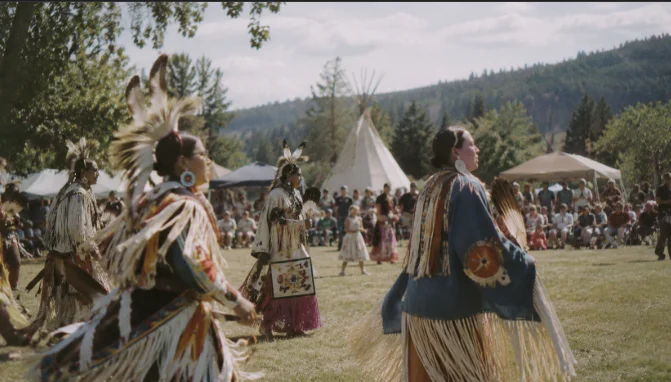
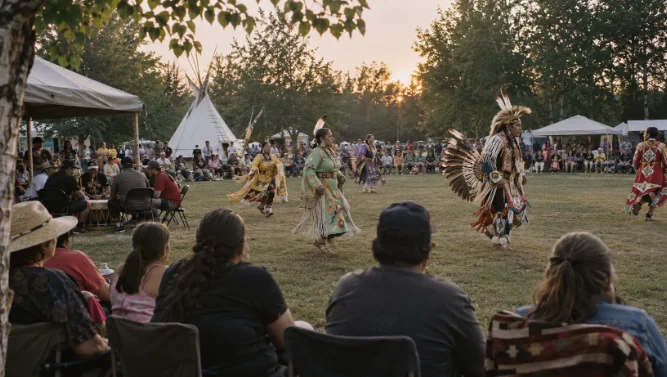
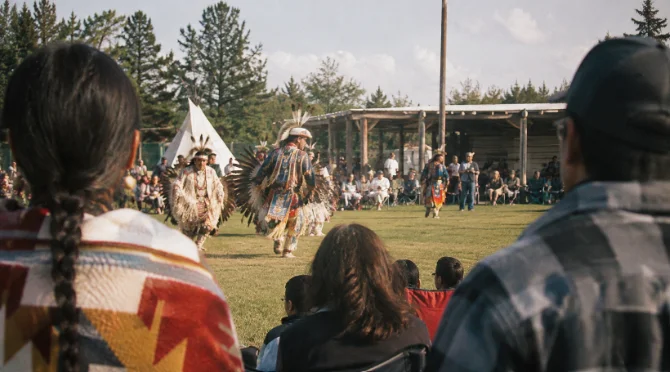
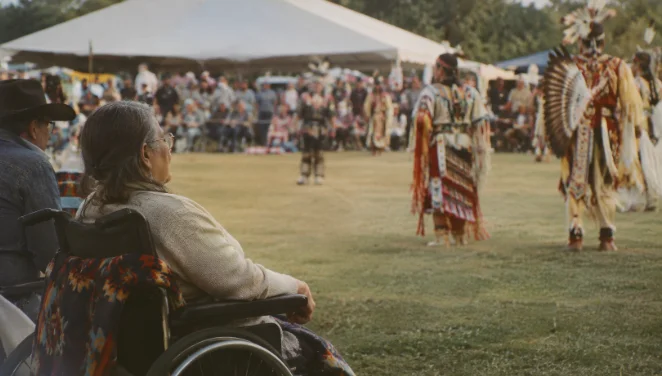
Some gatherings take place in modern university recreation centres with accessible entrances, permanent washrooms and designated seating. Others are held on outdoor community grounds where grass, gravel, temporary facilities and longer walking distances may present challenges.
Several Canadian powwow organizers publish detailed accessibility information. The University of Toronto Mississauga, for example, included designated accessible parking, American Sign Language (ASL) interpretation and a contact for accommodation requests in its 2026 All-Nations Powwow visitor information.
Smaller community events may have fewer formal resources but can sometimes offer practical arrangements when visitors contact them beforehand.
Avoid assuming that accessibility is either complete or entirely absent. A venue that works well for someone using a wheelchair may be challenging for someone with sound sensitivity, while an outdoor gathering with uneven terrain might offer a more comfortable sensory environment.
What Accessibility Looks Like at Different Powwow Venues
The physical setting can have a significant effect on your visit. Indoor and outdoor powwows each offer potential advantages, depending on your needs.
| Accessibility consideration | Indoor venue | Outdoor venue |
|---|---|---|
| Walking surfaces | Often level, paved or finished flooring | May include grass, gravel, sand or uneven ground |
| Weather protection | Usually more predictable | Depends on available tents and shelters |
| Washrooms | May have permanent accessible facilities | May rely on temporary accessible washrooms |
| Seating | Bleachers, fixed seating or designated areas | Often requires visitors to bring their own chairs |
| Noise levels | Sound may be amplified by enclosed spaces | Sound levels vary with distance and location |
| Parking | May offer designated accessible spaces | Distance and terrain can vary considerably |
| Rest areas | May include quieter corridors or separate rooms | Depends on shade, shelters and site layout |
| Temperature | May have heating or air conditioning | Direct exposure to heat, wind and changing weather |
These are possible differences rather than guaranteed features.
An indoor arena might have accessible entrances but limited wheelchair viewing spaces. An outdoor venue might have temporary accessible pathways leading directly to a covered seating area.
The Summer Solstice Indigenous Festival in Ottawa has addressed outdoor accessibility through measures such as mobility mats and accessible viewing facilities. Its 2026 visitor information also acknowledged that grass, sand and wet conditions could make certain areas more difficult to navigate.
The most useful accessibility information describes the entire visitor experience, not simply whether a venue is labelled accessible.
Planning a Visit With Mobility or Stamina Needs
When evaluating a powwow venue, consider the complete journey from your arrival point to the dance arena, washrooms, food vendors and exit.
A short distance on a map does not necessarily mean an easy route.
Parking, Drop-Off Areas and Walking Distances
Accessible parking is a helpful starting point, but its location matters just as much as its availability.
If you use a wheelchair, walker, cane or another mobility aid, ask how far the designated parking area is from the main gathering space. Find out whether the route involves slopes, curbs, loose gravel or grassy surfaces.
For example, an accessible parking space located 200 metres from an arena may be suitable for one visitor but impractical for another, particularly if the route crosses uneven ground.
If you are being driven by someone else, ask whether a passenger drop-off area is available closer to the entrance.
For rural powwows, consider the return journey as well. Accessible taxis, public transit and other transportation services may be limited outside larger urban centres, especially during evenings and weekends.
Seating, Wheelchairs and Mobility Aids
Powwows often involve several hours of dancing, singing and announcements. Having somewhere comfortable to sit can make a considerable difference, even if you do not normally require mobility assistance.
Outdoor gatherings frequently encourage visitors to bring folding chairs. Indoor venues may provide bleachers or fixed seating, which can be difficult for people who need back support, armrests or space for mobility equipment.
Before attending, ask whether the event has:
- Designated wheelchair viewing areas with unobstructed sightlines.
- Seating for accompanying family members or support persons.
- Space for walkers and other mobility aids.
- Chairs with backs or armrests.
- Accessible routes between seating and other public areas.
Try to distinguish between being able to enter the arena building and being able to enjoy the gathering once inside.
A wheelchair-accessible entrance does not necessarily guarantee a suitable viewing position.
Accessible Washrooms and Rest Areas
Permanent accessible washrooms are more common at universities, recreation centres and established event facilities. Outdoor powwows may use portable accessible units.
Ask where the facilities are located and whether the route to them is suitable for your mobility needs.
If you require a private changing area, an adult changing facility or space for personal care assistance, confirm that separately. A standard accessible washroom may not provide everything you need.
Rest areas deserve similar attention. Having somewhere to sit away from direct sunlight, crowds or the main activity can make a longer visit considerably more manageable.
Preparing for Sound, Crowds and Sensory Stimulation
Drumming and singing are central to powwow gatherings. For visitors unfamiliar with the sound environment, the combination of live drums, amplified announcements, movement and large crowds can be more intense than expected.
People with sensory sensitivities, autism, sound sensitivity or other accessibility needs may find it helpful to plan their seating and breaks in advance.
Understanding the Sound Environment
Powwow drums and singers create a powerful live sound that can carry across an entire venue.
Indoor arenas may have reflective surfaces that make sound feel more concentrated, while outdoor venues sometimes allow visitors to find quieter positions farther from the main activity.
However, outdoor events can also use powerful speaker systems, so being outside does not automatically mean lower noise levels.
If noise-reducing headphones or earplugs help you participate comfortably, bring them along. Try to maintain enough awareness of announcements to follow the hosts’ instructions, or arrange for someone accompanying you to communicate important information.
Visitors who are Deaf or hard of hearing may wish to ask about ASL interpretation, written programs, visual announcements or alternative ways of receiving event information.
Choosing Where to Sit
The closest available seat is not necessarily the most comfortable.
A position slightly farther from the dance arena may provide a better balance between seeing the dancers, hearing announcements and managing sensory stimulation.
If you anticipate needing frequent breaks, consider a permitted seating location near an exit or public walkway. This allows you to step away without repeatedly moving through crowded rows.
Avoid occupying spaces reserved for dancers, drum groups or Elders unless the organizers direct you there.
Asking About Quiet Spaces
Some Indigenous communities and event organizers are developing dedicated sensory-friendly facilities.
In August 2026, the Cree Board of Health and Social Services of James Bay reported on a Sensory Teepee introduced at the Chisasibi Pow Wow in northern Quebec.
The initiative offered a quieter environment where children and adults could take breaks from the noise and activity of the gathering. Visitors had access to comfortable seating, sensory tools and noise-reducing headphones.
It is a useful example of how accessibility can extend beyond physical access.
Not every powwow has a dedicated sensory space, however. Before attending, ask whether there is a quieter public area where you can rest temporarily and return when you feel comfortable.
Do You Have to Stand During Grand Entry?
No. If a disability, injury, health condition or mobility limitation prevents you from standing comfortably or safely, you can remain seated respectfully during Grand Entry.
Standing and removing hats during Grand Entry and certain songs are customary expressions of respect for visitors who are able to do so.
Toronto Metropolitan University’s powwow protocol guidance explicitly recognizes that mobility and physical ability may prevent someone from standing.
If you remain seated, you can still show respect by paying attention, pausing conversations and following the announcer’s instructions regarding photography and other activities.
You should not feel obliged to stand through pain, dizziness, fatigue or physical instability.
If you have concerns about a particular protocol, contact the organizers beforehand. You can explain what accommodation you need without necessarily sharing your complete medical history.
Respectful participation is not measured by physical ability.
Visiting With Children or Someone Who Needs Regular Breaks
Attending a powwow with children, older relatives or someone who experiences fatigue requires a different approach from planning a visit independently.
Rather than organizing your day around every scheduled activity, identify the parts of the gathering you would most like to experience and allow flexibility around them.
Grand Entry can be a meaningful starting point, followed by selected dance categories, a meal break and time exploring the vendor area.
Bring familiar snacks where permitted, drinking water, any necessary medications or personal care supplies, and suitable clothing for the conditions.
For outdoor gatherings, remember that prolonged exposure to summer heat, humidity or direct sunlight may become uncomfortable even when the initial forecast seems manageable.
If you are travelling with a child who benefits from predictable routines, explaining the sequence of the day beforehand may help. Describe the possibility of loud drumming, crowds, waiting periods and changes to the schedule.
A simple plan for taking breaks can make the gathering more enjoyable for everyone.
What to Ask the Organizer Before You Travel
The Government of Ontario’s Guide to Accessible Events identifies considerations such as accessible transportation, parking, pathways, facilities and communication. While local requirements differ across jurisdictions, these practical considerations are useful when evaluating public gatherings elsewhere in Canada.
Instead of asking only whether the powwow is accessible, focus on the arrangements that would make attendance possible for you.
| What to check | Questions to ask |
|---|---|
| Parking and drop-off | Is there designated accessible parking or a passenger drop-off area? |
| Walking routes | How far is the arena from parking, and what are the ground conditions? |
| Seating | Are wheelchair viewing spaces and companion seats available? |
| Washrooms | Are accessible washrooms available near the gathering? |
| Sensory environment | Is there a quiet or low-stimulation space for breaks? |
| Communication | Is ASL interpretation or another communication accommodation available? |
| Service animals | What arrangements apply to service animals at the venue? |
| Support persons | Are there separate admission arrangements or seating options? |
| Re-entry | Can visitors leave temporarily and return to the gathering? |
Service animals deserve particular attention because a general prohibition on pets does not necessarily apply to disability-related service animals. Applicable accessibility and human rights requirements can differ between jurisdictions, so confirm the arrangements with the host rather than assuming every event follows the same process.
A short message to the organizers could read:
Hello, I’m planning to attend your upcoming powwow and would appreciate some information about accessibility. Could you please let me know whether there is accessible parking, a suitable route to the arena, accessible washrooms and designated seating? I would also appreciate any information about quieter areas where visitors can take a break. Thank you for your help.
Adapt the message to your individual needs. Specific questions are generally easier for organizers to answer than a broad request about accessibility.
Once your accessibility questions have been answered, planning the rest of your powwow visit will help you coordinate transportation, arrival times, meals and breaks.
When a Shorter Visit May Be the Better Choice
You do not need to spend an entire day at a powwow to have a meaningful experience.
For someone managing chronic pain, fatigue, sensory sensitivities or mobility limitations, attending one dance session or spending a couple of hours at the gathering may be more comfortable than committing to a full-day program.
If the venue is unfamiliar, a shorter first visit can also help you understand which arrangements work well and what you might need to prepare differently next time.
Build flexibility into your departure plans. If you are comfortable, you can stay longer. If the conditions become difficult, you can leave during an appropriate moment without feeling that you have missed the purpose of the visit.
Powwow accessibility is ultimately about creating opportunities for people to share in community life according to their individual abilities and circumstances. A thoughtful visit, however long it lasts, can provide a valuable opportunity to listen, learn and support the Indigenous communities and artists who make these gatherings possible.