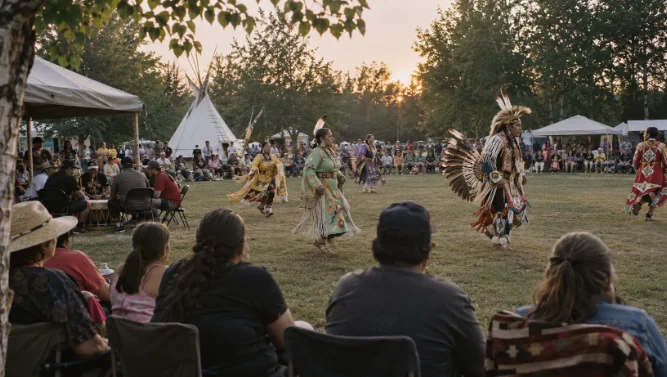
How Long Does a Powwow Last? Understanding Grand Entry, Dance Sessions and the Daily Schedule
A powwow advertised for an entire weekend can leave first-time visitors wondering whether they need to set aside two full days or simply arrive in time for the opening. Unlike a concert with a fixed running time, a powwow may include several dance sessions, opening songs, community activities, meal breaks and evening gatherings.
A visit of two to three hours is a reasonable starting point, although many public powwows run throughout the day or across an entire weekend. Understanding how the schedule works will help you decide when to arrive, how long to stay and which arrangements to make before leaving home.
How Much Time Should You Set Aside for a Powwow?
There is no standard duration for a powwow. Smaller community gatherings may take place over an afternoon, while larger events can continue from morning until late evening or span several days.
Visitors generally do not need to attend the entire event. The amount of time you set aside depends on the host’s program, your interests and how much travelling is involved.
A Short Visit of Two or Three Hours
If this is your first powwow, two or three hours can give you a meaningful introduction without committing to an entire day.
Try to arrive before Grand Entry, stay for the opening songs and watch several dance categories. Depending on the program, you may also have time to explore the vendor area, purchase food or speak with Indigenous artists.
This approach works particularly well for families with young children, visitors with limited stamina and people attending a local gathering close to home.
The main trade-off is that a shorter visit may not include every dance style or an opportunity to join an intertribal dance.
Spending Most of the Day at a Powwow
Setting aside four to six hours gives you more flexibility to experience different parts of the gathering.
Rather than watching continuously, you can take breaks, explore the food and craft vendors, listen to announcements and return to the arena when another dance category begins.
At larger outdoor powwows, having extra time also means you do not need to rush between activities. You can spend part of the afternoon getting to know the event rather than concentrating entirely on the schedule.
Attending a Multi-Day Powwow
Some of Canada’s larger powwows take place over two or three days, with separate afternoon and evening sessions.
The First Nations University of Canada Spring Celebration Powwow in Regina, Saskatchewan, is one example. Its published hours for April 18 and 19, 2026, extended from 8 a.m. to 11 p.m. on Saturday and from 8 a.m. to 7 p.m. on Sunday.
Those hours illustrate the scale of a large gathering, not an expectation that visitors remain at the venue throughout the weekend.
If you are travelling from another community, check whether admission covers multiple days, whether re-entry is permitted and whether nearby accommodation is needed.
How to Read a Powwow Schedule
A powwow poster may contain several different starting times. The gates might open in the morning, while Grand Entry takes place around noon and another dance session begins in the evening.
Knowing the difference between these times can prevent you from arriving too early or missing something you particularly wanted to experience.
| Schedule item | What it means for visitors |
|---|---|
| Gates open | Visitors can arrive, find seating and become familiar with the venue. |
| Dancer registration | Participants register for dancing or competitions; spectators usually follow separate admission arrangements. |
| Grand Entry | The formal opening procession of the powwow or a scheduled session. |
| Opening songs and welcome | Follow the announcer’s instructions regarding standing, photography and other protocols. |
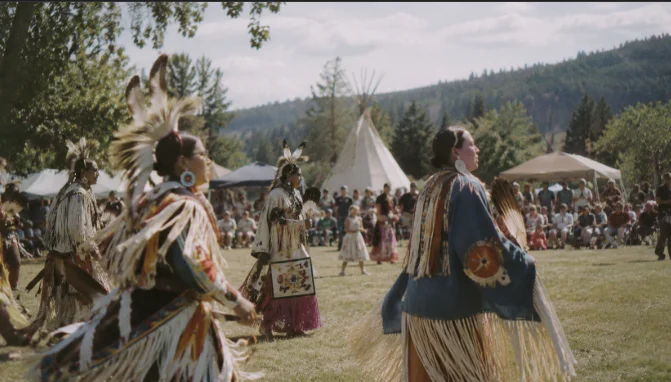
| Dance categories | Different styles and age groups enter the arena according to the program. |
| Intertribal | Visitors may be invited to join the dancing. |
| Special | A particular dance, contest, recognition or other activity organized for the occasion. |
| Supper break | A scheduled pause that may allow time for meals and rest. |
| Evening Grand Entry | The formal opening of another session, where scheduled. |
| Closing | Final songs, announcements or other activities determined by the hosts. |
Real Canadian event schedules demonstrate how much these arrangements can vary.
At the 2026 South Island Powwow, hosted by Songhees Nation in Victoria, British Columbia, on September 30, the gates opened at 10 a.m., Grand Entry was scheduled for noon, and the advertised gathering concluded at 7 p.m.
The University of Toronto Mississauga’s 2026 All-Nations Powwow followed a shorter format, with doors opening at 11 a.m., Grand Entry at noon and the program ending at 5 p.m.
Both events offered visitors a substantial public program, but the amount of time available before and after Grand Entry was different.
Use previous schedules to understand how powwows are organized, but always consult the current year’s program before travelling.
What Happens During Grand Entry?
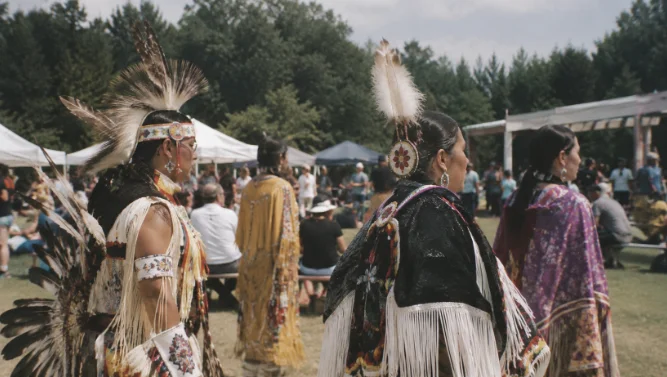
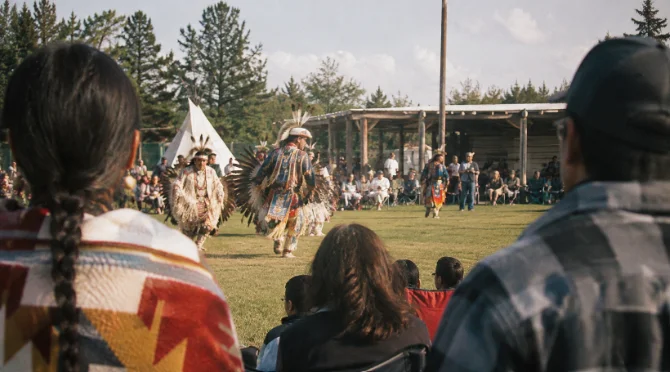
Grand Entry is the formal opening of a powwow or one of its scheduled dance sessions. It brings dancers and other participants into the arena according to the protocols established by the host community.
The procession may include Eagle Staffs, flags, veterans, community representatives and dancers of different ages and styles. Drumming and singing accompany the entry, and opening songs, acknowledgements or welcoming remarks may follow.
There is no fixed duration for Grand Entry. The size of the gathering, the number of dancers and the host’s opening protocols all influence how long it takes.
As a visitor, it is sensible to leave a generous amount of time for the entire opening rather than planning to leave immediately after the procession.
When to Arrive
For a first visit, aim to reach the venue approximately 30 to 60 minutes before the advertised Grand Entry, provided the gates are already open.
This is a practical planning recommendation rather than a cultural requirement.
At a smaller venue, finding parking and a suitable place to sit may take only a few minutes. At a larger gathering, you may need considerably more time to walk from the parking area, locate accessible facilities, purchase admission and settle in.
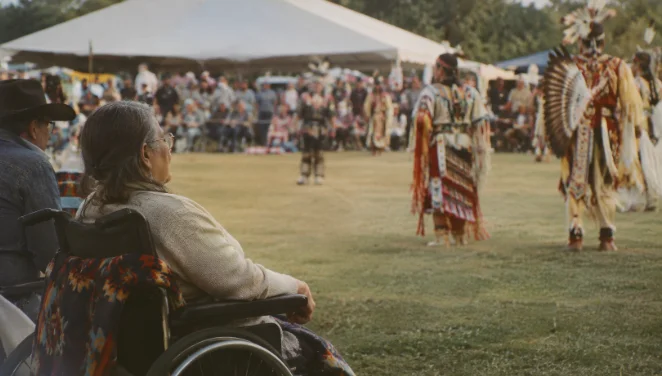
An early arrival is particularly helpful if you are bringing children, using mobility aids or carrying folding chairs.
What Visitors Should Do
During Grand Entry, listen carefully to the Master of Ceremonies (MC).
Visitors are generally asked to stand, if physically able, and remove their hats. Remain attentive during the opening songs and wait for the announcer to indicate when people may sit.
Photography and video recording protocols vary between events. Keep your camera or phone lowered unless the hosts have made it clear that recording is permitted.
If you arrive while Grand Entry is already underway, find a suitable place outside the arena and avoid interrupting the procession while looking for a seat.
Why Powwow Schedules Can Change
A powwow program provides a useful outline of the day, but individual activities may not always begin or end at the advertised time.
The gathering follows the needs and protocols of its participants. Dance rounds, recognitions, announcements and other activities can take different amounts of time depending on the circumstances.
Dance Sessions and Announcements
The Master of Ceremonies works alongside the arena director, powwow committee and other event staff to guide the program.
At a contest powwow, the number of registered dancers may affect the length of competition rounds. Some categories may require additional rounds, while special dances or community recognitions may extend a session.
There may also be periods when participants are preparing for the next activity. These pauses are a normal part of the gathering rather than necessarily an indication that something has gone wrong.
The announcer is usually the best source of information about what is happening next. Pay attention to announcements instead of relying exclusively on the printed schedule.
Weather and Outdoor Events
Outdoor powwows are particularly common during the warmer months, although Canadian weather can be unpredictable even in summer.
Extreme heat, heavy rain, thunderstorms or other adverse conditions may lead organizers to adjust, postpone or interrupt activities.
Indoor spring powwows, such as the large gathering in Regina, avoid many of the challenges associated with outdoor venues. However, indoor events can still experience schedule changes, capacity restrictions and delays.
If you are travelling a considerable distance, check the host’s latest announcements and local weather conditions before departing.
Can You Arrive Late or Leave Early?
At many public powwows, visitors can arrive after Grand Entry or leave before the closing activities, provided the host’s admission arrangements allow it.
You do not need to remain for every dance session to demonstrate respect for the gathering.
However, how you enter and leave matters. If a song, procession or recognition is taking place, wait for an appropriate moment before moving through crowded seating areas. Avoid crossing the arena, blocking dancers or interrupting people who are standing.
If you need to leave temporarily for a meal, a rest or another appointment, check whether your admission ticket or wristband allows you to return.
Families with young children and visitors who become tired may find it more comfortable to attend a single session. There is little benefit in remaining for several additional hours if you can no longer comfortably pay attention to what is happening.
Three Ways to Plan Your Day
The following examples illustrate how visitors can organize their time. They are flexible planning scenarios, not standard powwow schedules.
Short Visit: Two to Three Hours
Arrive shortly before Grand Entry, settle into an appropriate viewing area and remain for the opening.
Watch several dance categories, listen to the announcer’s explanations and spend some time visiting the vendors before leaving during a suitable break.
This approach is particularly useful if you live nearby or are introducing children to their first powwow.
Extended Visit: Four to Six Hours
Attend the opening session and stay long enough to see several different styles of dancing.
Allow time for lunch, browse handmade goods and artwork, and return to the arena for additional activities. If an intertribal dance is announced and visitors are invited, consider joining.
This option provides a balance between experiencing a substantial portion of the program and avoiding an overly demanding day.
Full-Day Visit
Arrive in the morning or before the first scheduled session and plan to remain through the afternoon and evening activities, where offered.
Bring suitable seating if permitted, enough water, weather protection and money for meals. Find out whether there are scheduled supper breaks and whether you can leave the venue temporarily.
A full-day visit makes particular sense when travelling to a larger regional gathering, but it is worth maintaining some flexibility rather than committing to a rigid departure time.
What to Confirm Before Leaving Home
A few minutes spent reviewing the host’s information can prevent unnecessary travel, missed activities and uncomfortable waits.
If the event takes place outside your own community, a practical guide to planning a powwow day trip can help you account for travel time, meals and other arrangements beyond the published schedule.
Before setting out, confirm:
- Opening time: When are visitors permitted to enter the venue?
- Grand Entry: Is there one scheduled opening or several throughout the weekend?
- Admission: Is entry free, ticketed or subject to advance registration?
- Re-entry: Can you leave temporarily and return later?
- Transportation: How long will the journey take, and when is the last available public transit service?
- Food and refreshments: Will vendors be available throughout the day?
- Seating and accessibility: Should you bring a folding chair, and are suitable facilities available?
- Weather: Are there any conditions or recent announcements that could affect the program?
For rural gatherings, save the current event poster and directions on your phone in case mobile reception is limited.
Above all, leave yourself enough time to enjoy the gathering without constantly checking the clock. A powwow is a community celebration with its own rhythm, and some of the most meaningful moments may be the ones you could not have planned for in advance.